

Dental practices win more emergency patients by answering the phone fast, offering a same-day slot instead of a waiting list, explaining the cost of the emergency visit clearly before the patient arrives, and following up so the emergency visit becomes a regular patient. A person in dental pain is calling more than one practice — the practice that answers, offers a time today, and sounds calm usually gets the patient.
Introduction: a toothache does not wait for Monday
A person with a broken tooth, a lost filling, or pain that kept them up all night is not comparing dental philosophies. They want relief today, from someone who sounds kind and certain. They will call two or three practices, and they will book the first one that offers a real time today.
That is why emergency dentistry is won at the front desk, not only in the chair. The clinical work matters, but the patient decides on the phone: who answered, how soon they can be seen, and whether the cost was explained honestly. This post gives you that system, in the order to build it.
What the numbers say
- About 38% of small-business calls are answered by a live person, according to 411 Locals research cited in 2026 coverage — so most callers do not reach someone on the first try.
- About 85% of callers who do not reach a business do not call back, in the same 411 Locals research — a caller in pain who reaches voicemail will call the next practice, not wait.
- Contacting a lead within 5 minutes makes it about 21 times more likely to qualify than contacting it after 30 minutes, according to Lead Response Management / XANT research — for an emergency, speed is the whole difference.
- 97% of consumers read reviews for local businesses, according to the BrightLocal Local Consumer Review Survey 2026 — a patient choosing a dentist in pain still reads reviews first.

1. Answer fast, and ask the questions that matter
The fastest way to win an emergency patient is to pick up. A person in pain will not leave three voicemails. They will keep calling until someone answers and offers a time.
When you do answer, ask four things, calmly:
- Where is the pain, and how bad is it right now?
- Is there swelling, bleeding, or a broken or lost tooth?
- Have you had trauma, or did this start on its own?
- Are you an existing patient, and can you come in today?
Those four answers tell you whether this is a same-day emergency, an urgent slot, or a next-day appointment. A caller who hears those questions knows they are talking to a practice that has handled this many times before.
2. Offer a real same-day slot, not a waiting list
“We can fit you in sometime next week” loses an emergency patient. “We have a slot today at 2:30, or 4:15 — which suits you?” wins them.
Build same-day capacity into the day:
- Hold one or two emergency slots each day, and protect them from routine bookings.
- When the slots are full, offer the next morning first thing, and say so clearly, with a real time.
- If the patient cannot come today, agree the time on the call and confirm it by text, so they do not keep calling around.
- Tell them what to do until the visit: what to avoid, and when to call back sooner — in plain language, without diagnosing over the phone.
A real time today is the offer. Everything else is information.
3. Explain the cost of the emergency visit before they arrive
A patient in pain fears the bill almost as much as the pain. A practice that explains the cost honestly before the visit wins trust before the patient walks in.
Say it simply:
- The cost of the emergency examination, in plain words.
- What that includes, and what would cost extra — for example, an X-ray, a temporary filling, or an extraction.
- Whether insurance is accepted, and what the patient will pay on the day.
- That the dentist will explain the options and the cost before doing any further work.
Give the cost on the phone, in writing by text if they ask, the same day. A patient who knows the cost can decide. A patient who does not will keep calling.
4. Make the emergency visit calm, clear, and complete
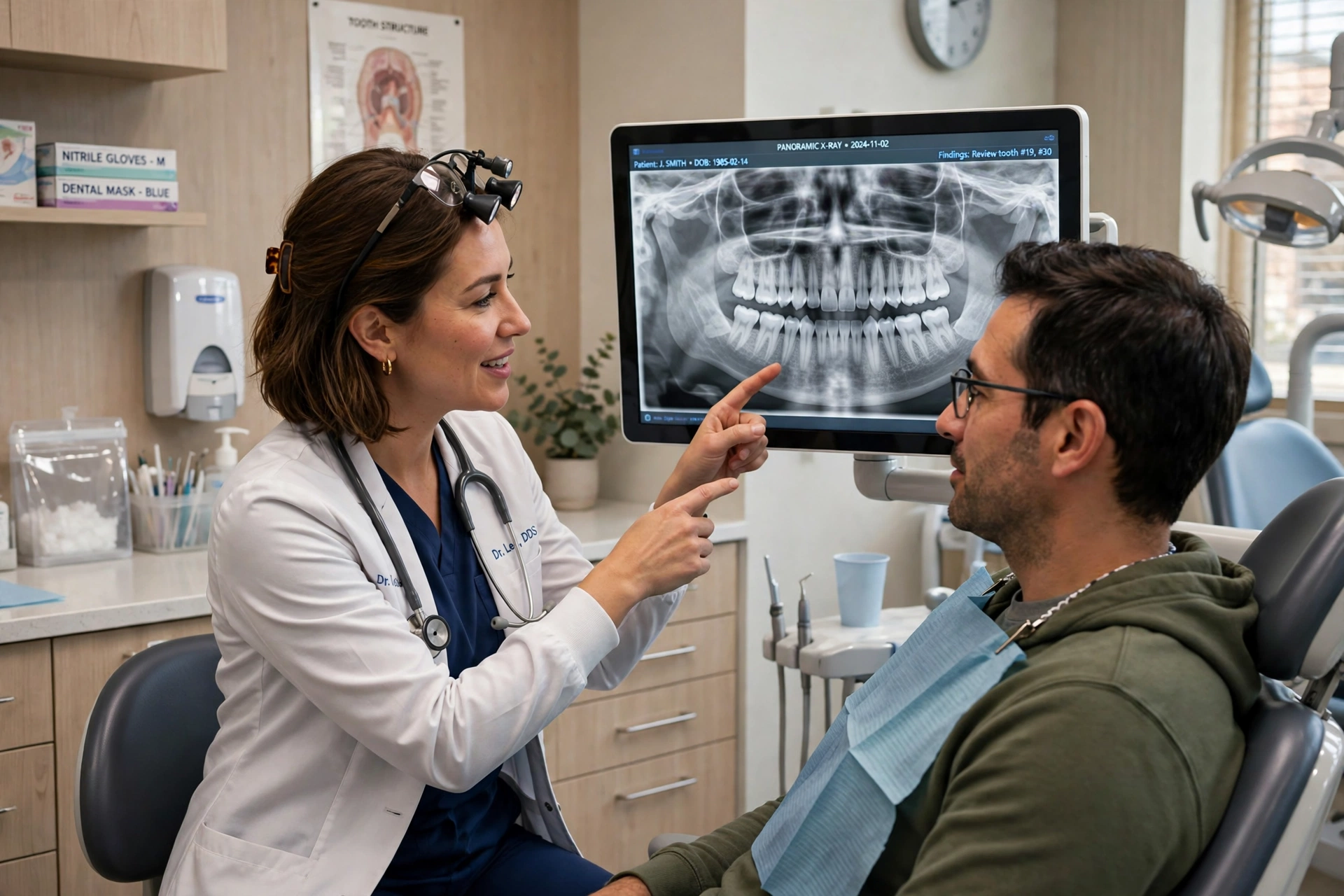
An emergency patient arrives anxious. The visit should make them calmer, not more worried. Before the dentist starts, the patient should know what will happen, how long it will take, and what it will cost.
A useful emergency visit covers four things:
- Listen first, then examine, and explain the problem in plain language.
- Offer the options: what fixes it today, what can wait, and what each costs.
- Do the work the patient agreed to, and confirm the next step before they leave.
- Book the follow-up on the visit — a check, a filling, or a regular cleaning — instead of saying “call us later”.
If the patient needs time to decide on further work, agree a callback time and keep it. That one call is often the difference between a one-off emergency and a regular patient.
5. Turn one emergency visit into a regular patient
An emergency patient is the best new patient a practice can win, because they have already trusted you once, in pain. The follow-up is what turns that trust into a regular patient.
Follow up with a simple rhythm:
- Same day: a short text thanking them, repeating the next step, and the follow-up time if one was booked.
- Next day: a call to check how they are feeling, and to answer any questions about the work.
- After that: invite them to book a regular check-up, and explain what it covers, without pressure.
Do not wait for them to remember you. A patient who was checked on the day after an emergency will recommend you to a friend who wakes up in pain. Related reading: How Dental Practices Fill Chairs With New Patients — the new-patient system this emergency work feeds.
6. Ask for the review when the relief is fresh
A patient whose pain is gone is grateful, and gratitude is the moment to ask for a review. Do not ask a week later, when the relief has faded.
Do three things before the patient leaves:
- Ask how they are feeling, and listen to the answer.
- Ask for a review while the relief is fresh, and send the link by text the same day.
- Leave a simple note: what was done, what to expect, and when to come back.
A review from an emergency patient is powerful, because it tells the next person in pain exactly what they need to hear: this practice answered, saw me today, and helped.
The 6-step emergency patient system, in order
- Answer fast, and ask where the pain is, how bad it is, and whether they can come today.
- Offer a real same-day slot, with two times, and protect emergency slots every day.
- Explain the cost of the emergency visit before they arrive, in plain words.
- Make the visit calm and complete, with options, costs, and a booked follow-up.
- Follow up the same day by text, and the next day by call, and invite a regular check-up.
- Ask for a review the same day, while the relief is fresh.
Checklist: what to do this week
- Hold one or two emergency slots each day, and protect them from routine bookings.
- Write down your four emergency questions, and use the same words on every call.
- Write down the emergency examination cost, what it includes, and what costs extra.
- Write one short follow-up text template for the day of an emergency visit.
- Send a review link by text on the day of every emergency visit for one full week.
What to avoid
- Leaving a voicemail-only answer when a caller is in pain.
- Offering “sometime next week” to a person who needs help today.
- Quoting no cost, and letting the patient discover the bill at the desk.
- Ending an emergency visit with “call us later” and no booked follow-up.
- Asking for a review a week later, when the relief has faded.
Frequently Asked Questions
What should you do next?
Want us to check where your patient leads are leaking? Book a free audit with DigiXpot. We will review how fast emergency calls are answered, what patients experience when they call, and the fastest fixes first.
Contact: info@digixpot.us | digixpot.us
