

Plastic surgeons get more bookings from before-and-after photos by earning real photos with clear consent, showing them in an organised gallery grouped by procedure, writing honest captions that say what was done and what the recovery involved, and following up with every person who viewed them and enquired. Patients buy results they can see — the photos do the convincing, and the follow-up does the booking.
Introduction: patients decide with their eyes
A person considering plastic surgery does not start with a price list. They start with pictures. They look for someone who looks like them, a result that looks natural, and a surgeon whose work they can trust before they ever pick up the phone.
That is why before-and-after photos are the strongest asset a practice has — and the most wasted. Too often the photos are buried, unlabeled, out of date, or shown without any system to follow up on the people who viewed them. This post gives you that system, in the order to build it.
What the numbers say
- 97% of consumers read reviews for local businesses, according to the BrightLocal Local Consumer Review Survey 2026 — a patient choosing a surgeon reads reviews before they book.
- 41% of consumers say they always read reviews when browsing, in the same BrightLocal 2026 survey — for a high-trust, high-cost decision, reviews are the first filter.
- 74% look for reviews from the last 3 months, in the same BrightLocal 2026 survey — recent proof matters more than old proof, and the same is true of photos: recent cases carry the most weight.

1. Earn real photos with clear consent, every time
A before-and-after gallery is only as strong as the consent behind it. No photo should ever be used without the patient’s clear, written agreement, and no patient should ever feel pressured to agree.
Build consent into the routine:
- Ask after the result is settled, not on the day of surgery, when the patient can decide calmly.
- Explain exactly where the photo will appear, and for how long, in plain language.
- Offer a choice: full gallery, social media, or no use at all — and respect a no without any change in care.
- Record the consent in writing, with the date, so the gallery is always defensible.
A gallery built on real consent is not only safer. It is more convincing, because every photo in it is a patient who was happy enough to share.
2. Organise the gallery by procedure, not by date
A gallery sorted by upload date is a drawer full of photos. A gallery sorted by procedure is a shop window.
Group the photos the way a patient thinks:
- By procedure: rhinoplasty, facelift, breast surgery, body contouring, and so on.
- By the starting point: similar age, similar concern, similar result — so a visitor can find someone like them.
- With honest captions: what was done, how long the recovery took, and what the result is at the time shown.
- With the newest cases easy to find, so the gallery never looks abandoned.
A visitor who finds three cases like theirs in under a minute is far more likely to enquire than a visitor who scrolls through fifty mixed photos and gives up.
3. Write honest captions, and show the recovery too
The photos that book consultations are not the most dramatic ones. They are the most honest ones.
Write captions that say:
- What procedure was done, in plain words, without jargon.
- How long after surgery the “after” photo was taken.
- What the recovery involved, honestly — swelling, downtime, and when the result settled.
- What the result is not: no promise that every patient will look the same.
Showing a real recovery, with its honest timeline, builds more trust than a perfect photo with no story. Patients who understand the recovery arrive at the consultation ready to decide, instead of arriving with doubts that were never answered.
4. Put the photos where patients actually look
A gallery that lives three clicks deep on the website is a gallery that does not work. Patients look in a few places, and the photos need to be in all of them.
Place them where they are seen:
- On the procedure pages, next to the explanation of that procedure — not only on a separate gallery page.
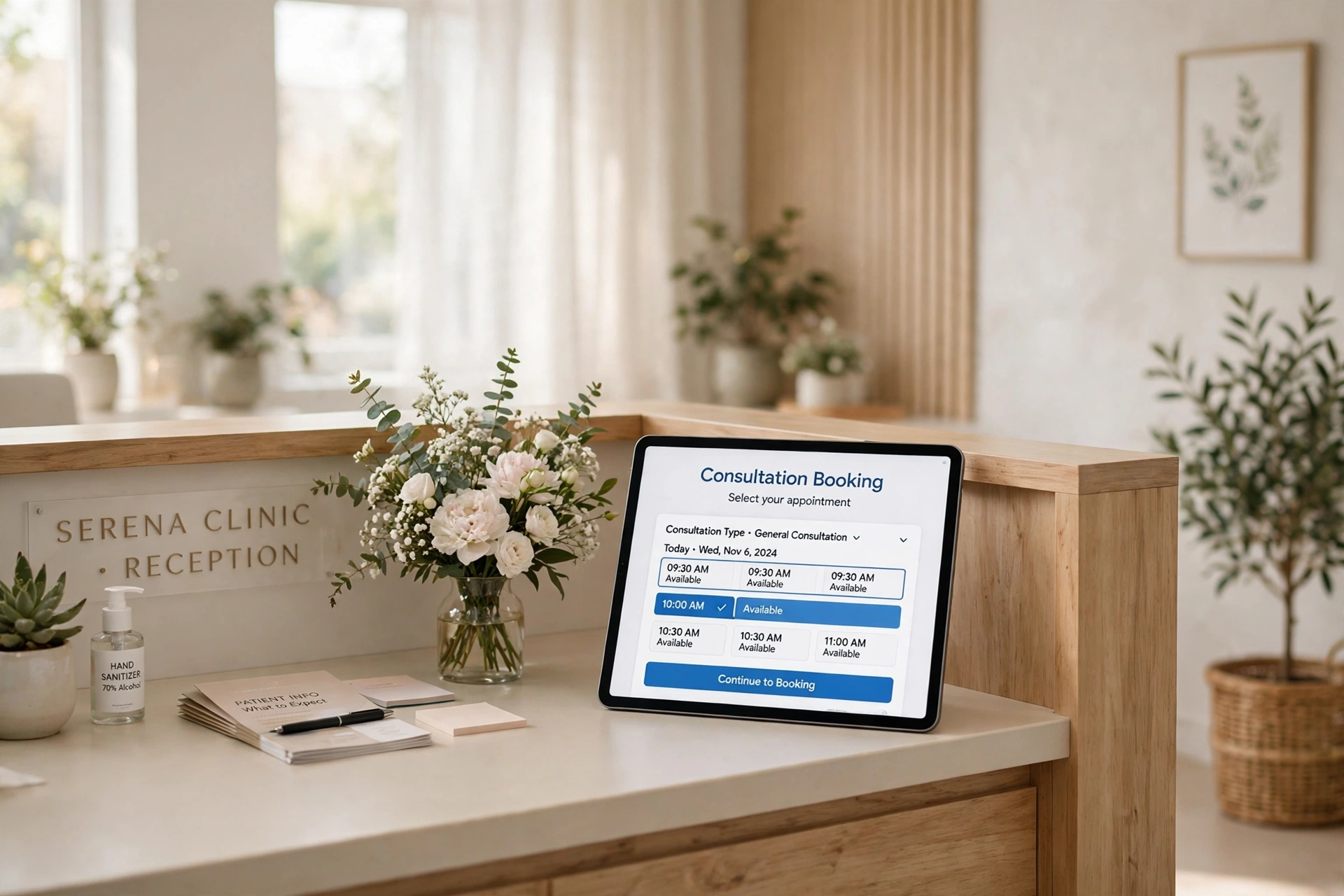
- On the consultation booking page, so a visitor who is almost ready sees proof at the moment of decision.
- On social media, in small sets with honest captions, linking back to the full gallery.
- In the consultation room itself, on a tablet, so the surgeon can show real cases during the conversation.
Every placement should carry one clear next step: book a consultation. A photo without a next step is a nice picture. A photo with a next step is a booking tool.
5. Follow up with everyone who enquired after viewing
Photos bring the enquiry. Follow-up brings the booking. A person who viewed the gallery and filled in a form is already interested — they do not need more convincing, they need a fast, warm reply.
Follow up with a simple rhythm:
- Same day: a short, personal reply thanking them, naming the procedure they asked about, and offering the next two consultation times.
- Next day: one call or message if there is no reply, to answer questions and book the time.
- After that: one more helpful message — a link to the gallery cases like theirs, or to the recovery information — and then stop chasing.
Do not send a generic price list as the first reply. Send a human answer, about their case, with a time to talk. Related reading: How Plastic Surgeons Turn Consultations Into Bookings — the consultation system this photo follow-up feeds.
6. Keep the gallery fresh, and measure what it does
A gallery that never changes quietly stops working. Patients notice when the newest case is a year old, and they wonder whether the surgeon is still doing that procedure.
Keep it alive with a simple routine:
- Add new consented cases every month, even if it is only two or three.
- Remove or update any case that no longer represents your current work.
- Check which procedure galleries get the most views and the most enquiries, and add more cases there first.
- Ask every new patient at consultation which photos they saw, so you learn what actually brought them in.
A fresh gallery, measured by the enquiries it brings, is a marketing asset. A gallery that is never updated is decoration.
The 6-step before-and-after system, in order
- Earn real photos with clear, written consent, asked after the result is settled.
- Organise the gallery by procedure, so a visitor finds someone like them fast.
- Write honest captions, including the recovery and the timing of the “after” photo.
- Put the photos where patients look: procedure pages, booking page, social media, consultation room.
- Follow up the same day with every enquirer, with a personal reply and two consultation times.
- Keep the gallery fresh every month, and track which galleries bring enquiries.
Checklist: what to do this week
- Write down your consent wording, and use the same words with every patient.
- Sort the gallery by procedure, and check that a visitor can find three cases like them in under a minute.
- Rewrite five captions to include what was done, when the “after” photo was taken, and the recovery.
- Add a “Book a consultation” step to every gallery page and procedure page.
- Write one short follow-up reply template for gallery enquiries, with two consultation times.
What to avoid
- Using any patient photo without clear, written consent.
- Showing dramatic photos with no caption, no timing, and no recovery story.
- Burying the gallery three clicks deep where patients never find it.
- Replying to a gallery enquiry with a generic price list and no personal answer.
- Letting the gallery go a year without a new case.
FAQ
Want us to check where your patient leads are leaking? Book a free audit with DigiXpot. We will review how your photos are shown, what enquirers experience when they ask, and the fastest fixes first.
Contact: info@digixpot.us | digixpot.us
