

Roofing companies stop losing jobs to missed calls by answering live when possible, returning every missed call within minutes, sending a text right away when they cannot pick up, and tracking each callback until an inspection is booked or the lead is honestly closed. Speed is the system, not a favour done when someone has a free moment.
Introduction: the job was already won, then lost
A homeowner with a leaking roof does not call one roofer and wait patiently. They call two or three, often within minutes of each other, and they book the first company that answers properly and sounds organised. That means a missed call is rarely just a missed call. It is a job that goes to the competitor who picked up.
This is not about working harder or hiring a call centre. It is about one simple rule, applied every time: no missed call goes unanswered for long, and no callback goes untracked. This post gives you that rule, in the order to build it.
What the numbers say (external research, not DigiXpot results)
- About 38% of small-business calls are answered by a live person, according to 411 Locals research cited in 2026 coverage — so most callers do not reach someone on the first try.
- About 85% of callers who do not reach a business do not call back, in the same 411 Locals research — a missed call is usually a lost lead, not a delayed one.
- Contacting a lead within 5 minutes makes it about 21 times more likely to qualify than contacting it after 30 minutes, according to Lead Response Management / XANT research — speed is the difference, not just politeness.
1. Answer live when you can, and say so clearly
The fastest callback is the one you never need, because someone answered. When the phone rings during working hours, answering live — with the company name, a friendly tone, and a clear next step — beats voicemail every time.
Make live answering possible, not accidental:
- Decide who answers first, and who answers when that person is on a roof or driving.
- Keep the greeting short: company name, a helpful opening, and one question about the problem.
- If the caller needs an inspection, offer the next two available times rather than asking them to call back later.
A homeowner who reaches a real person feels they have already started. A homeowner who reaches voicemail feels they have only started searching.
2. Return missed calls within minutes, not at the end of the day
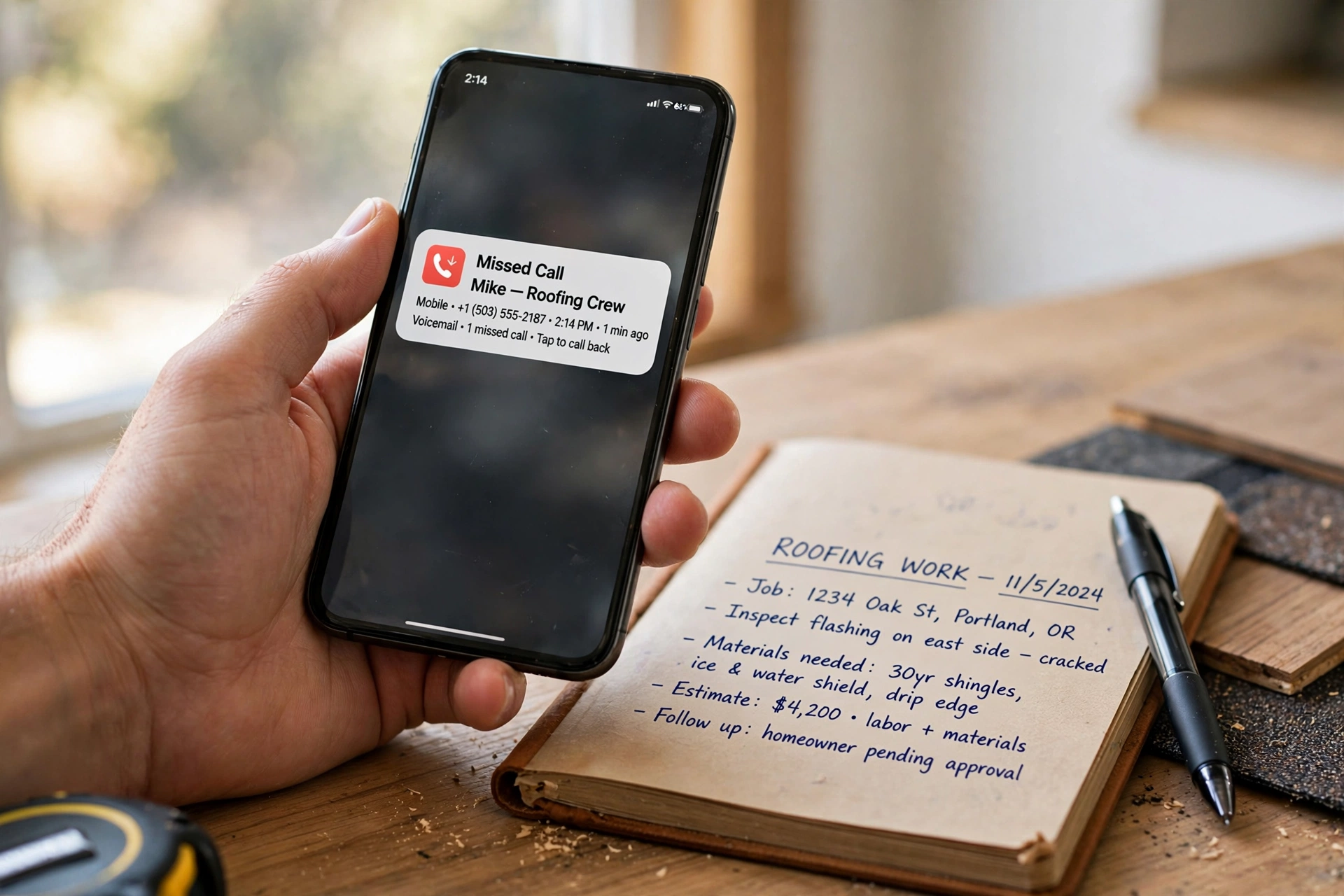
If a call is missed, the clock starts immediately. Returning it at the end of the day, or the next morning, usually means the homeowner has already booked someone else. Aim to return missed calls within minutes, and treat anything over an hour as late.
Build the habit into the working day:
- Check missed calls between jobs, not only when the phone is quiet.
- Return calls in the order they came in, starting with the oldest missed call.
- If you cannot reach the homeowner, leave a short voicemail and send a text as well, so they have two ways back to you.
Speed here is not pushiness. It is respect for a homeowner who is dealing with a leak, storm damage, or a roof that cannot wait.
3. Send a text right away when you cannot pick up
There will be times when no one can answer — on a roof, in a noisy yard, or already on another call. That is exactly when a fast text matters most. A short text tells the homeowner they were noticed, and it keeps your company in the race while you call back.
Keep the text short, personal, and useful:
- Thank them for calling, and name the company.
- Say you missed their call and will call back shortly, with a realistic time if you can give one.
- Ask one simple question, such as whether it is a leak, storm damage, or a planned replacement, so the callback is already useful.
- Include no hard sell and no long form to fill in.
One text, sent within minutes, often holds a lead that a silent missed call would have lost. Related reading: How Roofing Companies Get More Leads Without Buying More Ads — the lead system this fast follow-up protects.
4. Make the callback useful, not just fast
A fast callback that wastes the homeowner’s time still loses the job. Before you call back, know what you are calling about: the number, the time of the missed call, and any message or text they sent. Then use the call to move one step forward, not to start from scratch.
A useful callback covers four things:
- Confirm the problem in plain language, and listen before diagnosing.
- Ask where they are located and whether the job is urgent.
- Offer the next inspection times, and book one on the call if you can.
- Confirm the booking by text afterwards, with the day, time, and what to expect.
If the homeowner does not answer the callback, do not give up after one try. Try again later the same day, and send one more short text. After that, one polite follow-up the next day is reasonable. Repeated calling is not.
5. Track every missed call until it is booked or honestly closed
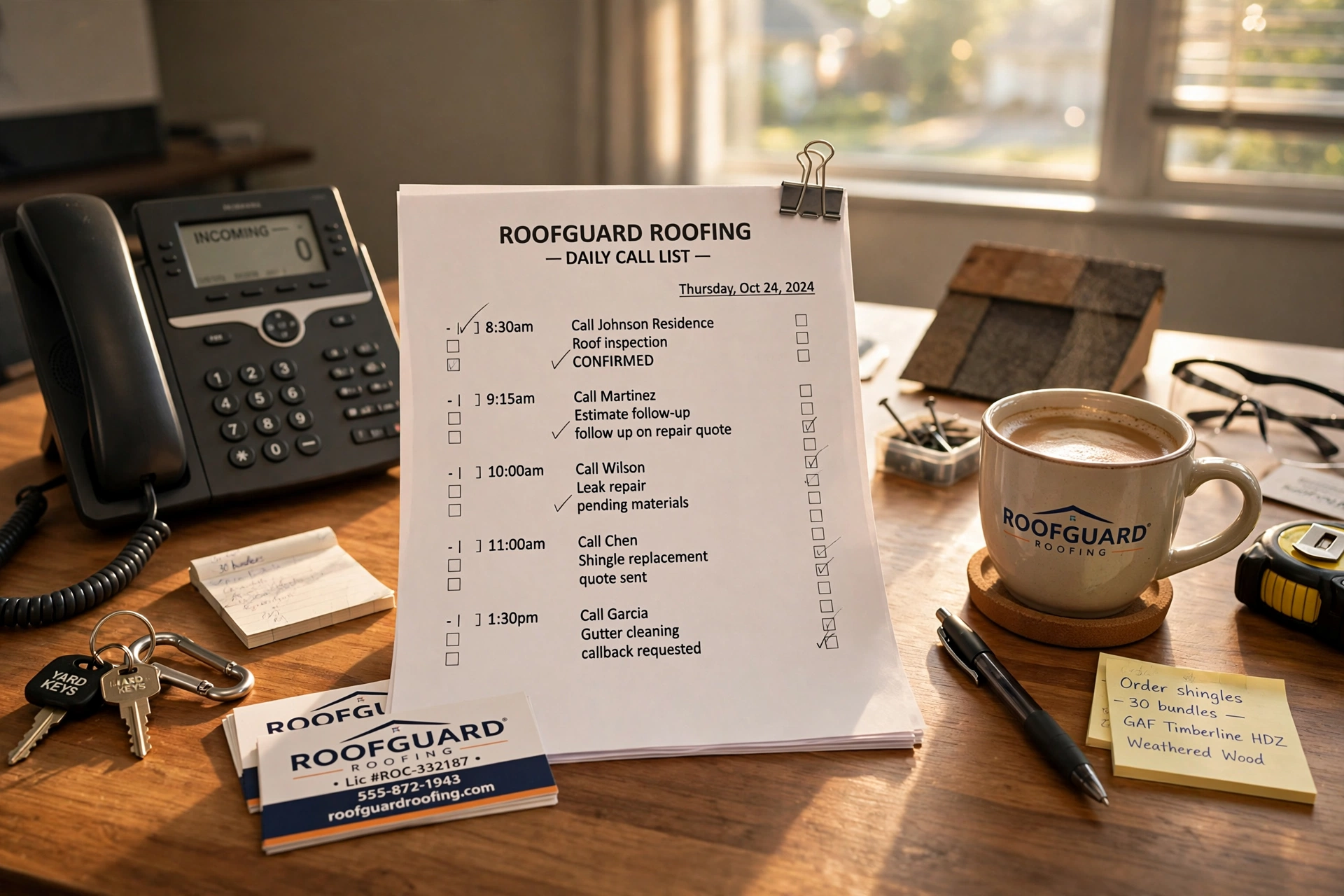
A callback system that lives in someone’s head will fail on a busy day. Track every missed call in one simple list, visible to whoever answers the phone, with four columns: who called, when, what was done, and what happens next.
Review the list twice a day:
- Morning: anything left over from yesterday that still needs a call.
- End of day: every missed call from today, either booked, awaiting a second try, or honestly closed because the homeowner chose someone else or no longer needs the work.
That review is where the system proves itself. If the same pattern keeps appearing — calls missed at lunchtime, or on a particular day — fix the cover for that time rather than blaming a busy week. Reviews also feed this system: a homeowner who was answered fast is far more likely to leave a good review, as explained in the roofing reviews post: How Roofers Get More Google Reviews Without Begging.
6. Fix the cover, not just the callback
If missed calls keep happening at the same time, the answer is cover, not effort. Decide in advance who answers when the main person is unavailable, and make sure that person can actually book an inspection, not just take a message.
Practical cover options, in order of simplicity:
- A named second person who answers when the first is on a job.
- A simple rule for after-hours calls: a text reply the same evening, and a callback first thing in the morning.
- A clear voicemail message that says when calls are returned, rather than a generic greeting.
Whatever cover you choose, test it. Call your own number during a busy period and see what a homeowner actually experiences. If the experience is confusing, fix it before the next real caller finds it.
The 6-step missed-call system, in order
- Answer live when possible, with a clear greeting and a next step.
- Return every missed call within minutes, oldest first.
- Send a short text right away when you cannot pick up.
- Make the callback useful: confirm the problem, offer inspection times, and book on the call.
- Track every missed call in one list until it is booked or honestly closed.
- Review the list twice a day, and fix cover for the times calls keep being missed.
Checklist: what to do this week
- ☐ Name who answers first, and who answers when that person is on a job.
- ☐ Write one short missed-call text template, and save it on the answering phone.
- ☐ Start one missed-call list, with who called, when, what was done, and what happens next.
- ☐ Return every missed call within minutes for one full week, and note what changes.
- ☐ Call your own number during a busy period, and fix anything confusing about the experience.
What to avoid
- Returning missed calls at the end of the day, or the next morning, as a routine.
- Sending a long text, a form link, or a sales pitch instead of a short, helpful reply.
- Calling back without knowing what the homeowner called about.
- Giving up after one unanswered callback, with no text and no second try.
- Keeping the missed-call list in one person’s head, where a busy day erases it.
Frequently Asked Questions
How fast should a roofing company return a missed call?
What should the text say when we cannot pick up?
How many times should we try to call back?
Do we need a call centre or answering service for this?
Call to action
Want us to check where your roofing leads are leaking? Book a free audit with DigiXpot. We will review how fast missed calls are answered, what homeowners experience when they call, and the fastest fixes first.
