

Plumbers win more water heater replacement jobs by answering the first call fast, asking the right questions about age, noise, leaks and hot-water loss, giving a clear replacement price on the spot instead of a vague range, and following up the same day when a homeowner needs time to decide. A water heater that has failed is an urgent job — the plumber who makes the decision easy usually gets it.
A homeowner with no hot water is not browsing for ideas. They need a shower in the morning, laundry done, and a house that works again. They will call two or three plumbers, and they will book the one who sounds certain, gives a straight price, and can come soon.
That is why water heater replacement is won on the phone and at the kitchen table, not only on the tools. The work itself is standard. The difference is how fast you respond, how clearly you explain repair versus replacement, and how easy you make it to say yes. This post gives you that system, in the order to build it.
What the numbers say
- About 38% of small-business calls are answered by a live person, according to 411 Locals research cited in 2026 coverage — so most callers do not reach someone on the first try.
- About 85% of callers who do not reach a business do not call back, in the same 411 Locals research — a missed call is usually a lost job, not a delayed one.
- Contacting a lead within 5 minutes makes it about 21 times more likely to qualify than contacting it after 30 minutes, according to Lead Response Management / XANT research — speed is the difference, not just politeness.
- 97% of consumers read reviews for local businesses, according to the BrightLocal Local Consumer Review Survey 2026 — a homeowner choosing a plumber for a four-figure replacement reads reviews first.
1. Answer fast, and ask the questions that matter
The fastest way to win a water heater job is to pick up. A homeowner with cold water will not leave three voicemails. They will keep calling until someone answers.
When you do answer, ask four things before anything else:
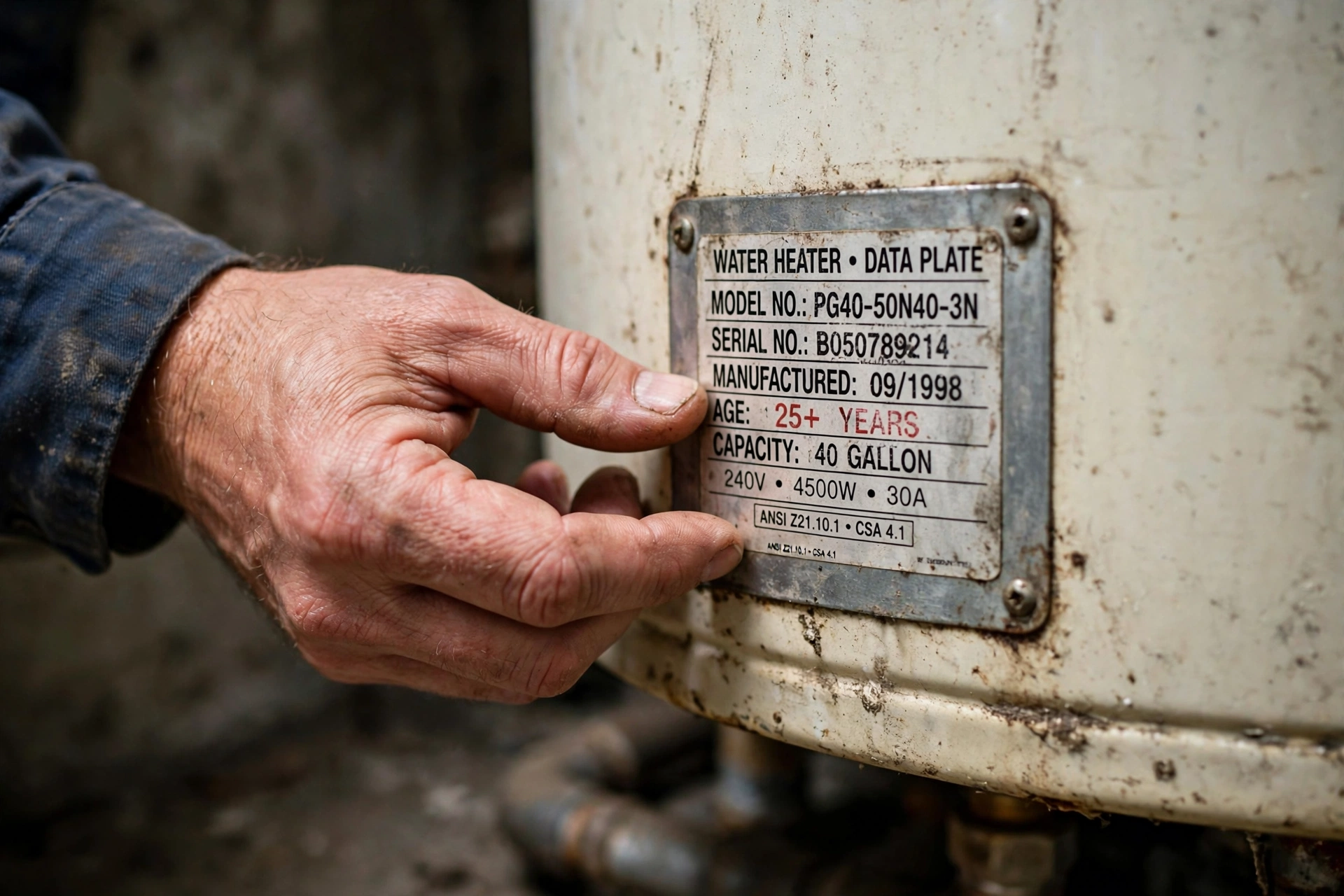
- How old is the heater, and is it gas or electric, tank or tankless?
- Is there water leaking from the tank, or only no hot water?
- Is the water rusty, noisy, or running out too fast?
- Is anyone in the house without hot water right now, and how urgent is it?
Those four answers tell you whether this is a repair, a same-day replacement, or a planned quote. A homeowner who hears those questions knows they are talking to someone who has done this many times before.
2. Say repair or replace honestly, in plain language
Homeowners fear being sold a new heater they do not need. The fastest way to win their trust is to be honest about the line between repair and replacement.
Explain it simply:
- Under 8 years old, no leak from the tank itself, and a failed part: repair is usually the honest answer.
- Over 10 years old, rusty water, rumbling sediment noise, or a leaking tank: replacement is usually the honest answer, because a repair only buys weeks.
- A leaking tank cannot be patched for long. Say so, and say why, instead of selling a temporary fix.
Give the homeowner the rule, not just the verdict. When they understand why replacement is the right call, they stop shopping for a second opinion and start asking when you can come.
3. Quote a clear replacement price on the spot
A vague price range loses water heater jobs. “Somewhere between $1,200 and $3,000, depending” tells a homeowner nothing, and it sends them to the next plumber for a real number.
Build your quote around three clear choices:
- A standard replacement: the same size and type, installed, with the old unit removed.
- A better option: a more efficient model, with the extra cost and the saving explained in one sentence.
- What is included: permit if needed, disposal, new valves and fittings, and the warranty in plain words.
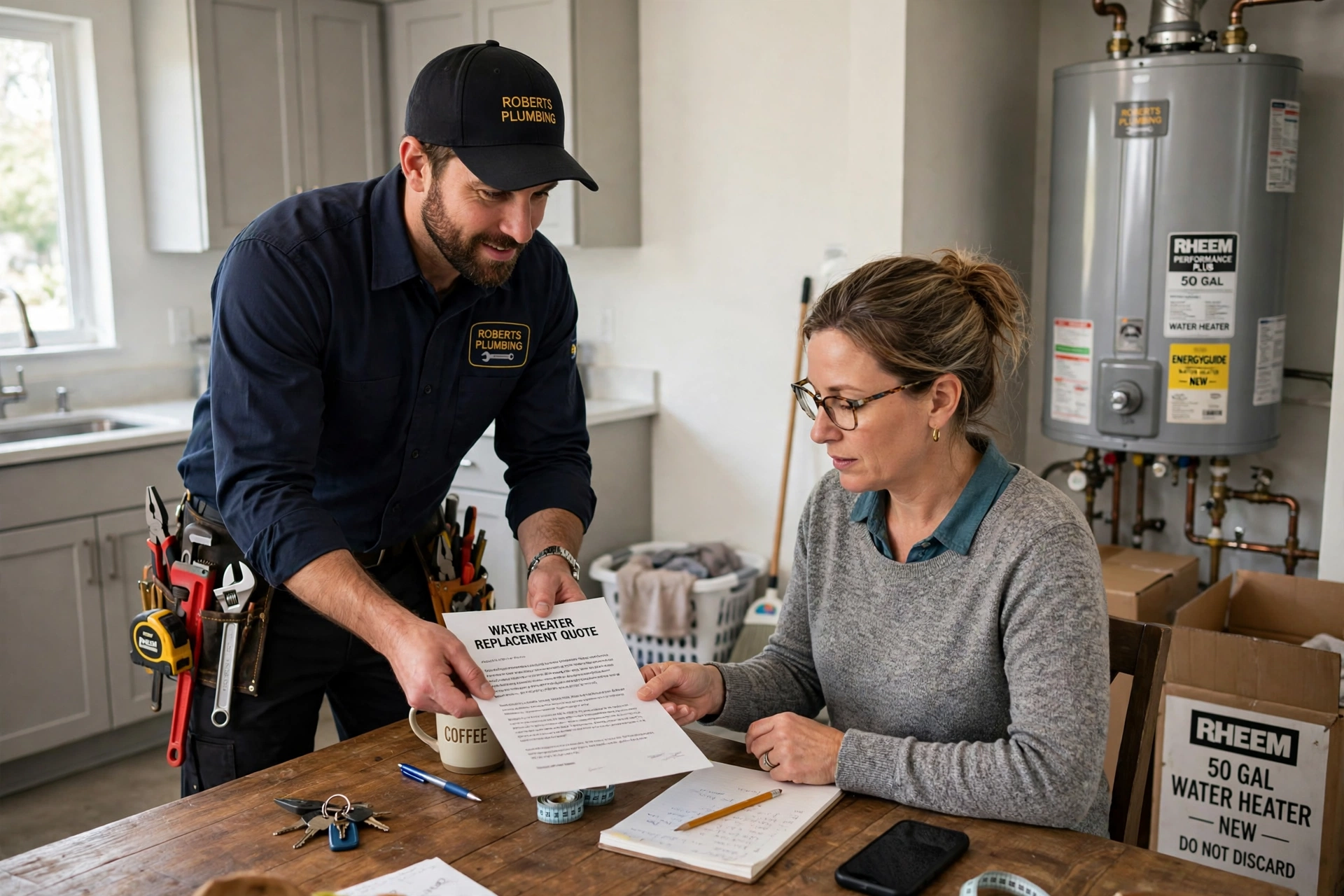
Give the price on the phone or at the visit, in writing, the same day. A homeowner who has a real number in front of them can decide. A homeowner with a range keeps calling.
4. Make the visit useful, not just a look
A water heater visit should end with a decision, not a promise to “send something over”. Before you arrive, know the model, the age, and the problem from the call. On site, check the venting, gas or power supply, water pressure, and space, so the quote you give is one you can stand behind.
A useful visit covers four things:
- Confirm the diagnosis in plain language, and show the homeowner the problem if you can.
- Offer the next installation times, and book one on the visit if they are ready.
- Leave a written quote even if they need time to decide, with the price, the model, and how long the job takes.
- Confirm the booking by text afterwards, with the day, time, and what to expect.
If the homeowner needs to check with a partner, do not leave it there. Agree a time to call back, and keep it. That one call is often the difference between a signed job and a lost one.
5. Follow up the same day, then once more
Most water heater replacements are not lost on price. They are lost in the gap between the quote and the decision. A homeowner who asked for a day to think will forget, get busy, or take a cheaper call from a competitor.
Follow up with a simple rhythm:
- Same day: a short text thanking them, repeating the price and the next available time.
- Next day: one call, at the time you agreed, to answer questions and book the job.
- After that: close the lead honestly if they chose someone else or decided to wait. Do not chase.
One text and one call, done on time, will save more jobs than any discount. Related reading: How Plumbers Win More Emergency Calls — the fast-answer system this replacement follow-up protects.
6. Turn one replacement into reviews and repeat work
A water heater replacement is a high-trust, high-value job. It is also the best moment to earn a review and future work, because the homeowner is relieved and the result is obvious: hot water again.
Do three things before you leave:
- Walk the homeowner through the new heater: how to set it, what the noises mean, and when to call.
- Ask for a review while the relief is fresh, and send the link by text the same day. Do not ask a week later.
- Leave a simple note: the install date, the model, and when the next check is due, so the next job — a flush, a part, or a second property — comes back to you.
A replacement done well, followed by one review ask, builds the reputation that brings the next replacement without advertising.
The 6-step water heater system, in order
- Answer fast, and ask the four questions: age, leak, water quality, urgency.
- Say repair or replace honestly, and explain the rule behind it.
- Quote a clear replacement price on the spot, with three choices and what is included.
- Make the visit end in a decision, with a written quote and a booked time.
- Follow up the same day by text, and once more the next day by call.
- Ask for a review the same day, and leave the install details for repeat work.
Checklist: what to do this week
- Write down your repair-or-replace rule by age, leak, and rust, and use the same words every time.
- Build three clear replacement prices: standard, better, and what is included in each.
- Write one short follow-up text template for quotes that need a day to decide.
- Start a list of every water heater quote, with who got it, when, and what happens next.
- Send a review link by text on the day of every replacement for one full week.
What to avoid
- Leaving a voicemail-only answer when a homeowner has no hot water.
- Quoting a wide price range instead of a real number.
- Selling a repair on a leaking, rusty tank that will fail again in weeks.
- Leaving a quote visit with no written price and no agreed callback time.
- Asking for a review a week later, when the relief has faded.
Frequently Asked Questions
What should you do next?
Want us to check where your plumbing leads are leaking? Book a free audit with DigiXpot. We will review how fast water heater calls are answered, what homeowners experience when they call, and the fastest fixes first.
Contact: info@digixpot.us | digixpot.us
